Old Time Cowboy
The year was 1885. Austin Milroy “Catt” Crismon had just purchased his first
Colt Single Action Army Revolver from the Sears & Roebuck Catalog for about $17
and change. The gun was new and it came with a used Union Army holster and
Union Army web belt. I wonder how he paid for it? No credit cards,
telephone, and probably not even money orders back then. Surely Vienna,
Missouri where Catt lived had a bank. But, did Sears in Chicago even accept a
check drawn on a bank in a Missouri town most of us today probably never even
heard of it? We wannabe cowboys sure take a lot for granted these days. That
was a mite of money back then. But, what the heck, Catt was getting ready to
see exciting New Orleans for the first time.
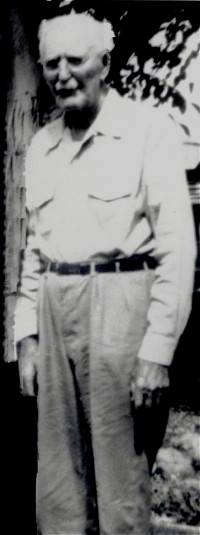 At the tender age of 16, Catt Crismon was ready to taste the “fast life” down
the Mississippi. Oh, he had heard many titillating stories. Catt’s brothers
and uncles had a thriving business going. The Crismon boys felled prime Missouri timber
and hand cut them into railroad ties. When Catt told me the story he was 95 at
the time and fire was in his eyes as he spun his tale! He was a mighty
handsome man even at his advanced age. The railroad ties were
tied together into solid wooden barges. The ties were to be floated down the
Gasconade River to the Missouri River, on to the Mississippi River at St. Louis
and then down to New Orleans. The last barge was fashioned into a box with a
roof, somewhat like the caboose of a train. Inside were a new blue sheet metal
cook stove, provisions, plenty of Kentucky moonshine, and bedrolls. This was the
first time the older brother, Lon, would tolerate his younger brother along. Catt’s job was to cook for the crew.
At the tender age of 16, Catt Crismon was ready to taste the “fast life” down
the Mississippi. Oh, he had heard many titillating stories. Catt’s brothers
and uncles had a thriving business going. The Crismon boys felled prime Missouri timber
and hand cut them into railroad ties. When Catt told me the story he was 95 at
the time and fire was in his eyes as he spun his tale! He was a mighty
handsome man even at his advanced age. The railroad ties were
tied together into solid wooden barges. The ties were to be floated down the
Gasconade River to the Missouri River, on to the Mississippi River at St. Louis
and then down to New Orleans. The last barge was fashioned into a box with a
roof, somewhat like the caboose of a train. Inside were a new blue sheet metal
cook stove, provisions, plenty of Kentucky moonshine, and bedrolls. This was the
first time the older brother, Lon, would tolerate his younger brother along. Catt’s job was to cook for the crew.
The cook also had to make sure that the caboose didn’t run aground around bends
in the river. Being a simple job, Catt had considerable time to while away.
Now in Missouri, the James brothers and Younger bunch were considered to be folk
heroes. Why, Catt couldn’t say. But, he said he understood they all shot Colt
Single Action revolvers! And, they were reputed to be fast on the draw! That’s
what Catt and many other youngsters in those days (and even today) also want to
be - a Cowboy Action Shooter. With little else to while away the hours down the
river, Catt practiced his fast draw. After all, handling a Single Action was
his heritage. His dad, a Confederate Civil War hero, was at one time the
Maries County Sheriff. His grandpa was at one time the Maries County
Judge. In later years Catt would also serve as a Town Marshall.
Catt carefully set up his shooting target! He tied three railroad ties in an
upright position facing aft. Into the center tie at about chest high he drove a
railroad spike. The challenge was to practice his fast draw and hit the nail
each shot, driving the nail into the tie. Now Catt didn’t say if he ever hit
the spike, but did say he had a heck of a good time trying! However, Catt
forgot one important element. He failed to bring with him any reloading
equipment or reloading components. He soon ran out of ammo. The lesson learned in 1885 applies today; no
matter how fast and experienced in Cowboy Action Shooting you are, sometimes
it gets down to the quantity and quality of your ammo!
Return